
Universal Pipette Tips
Disposable pipette tips designed to fit single and multichannel pipettes from most manufacturers; offer acceptable performance compared to pipette specific tips and can be used with a variety of pipette models.
Single-use universal pipette tips are designed for compatibility with most mechanical and electronic single and multichannel pipettors.
Universal pipette tips are available in a range of types, sizes, colors, styles, and packaging configurations and may be designed for specific purposes or tasks.
- Capacity or volume based on the pipettor size
- Filters to reduce contamination and cross-contamination
- Color
- Sterility or autoclavability
- Tip style: beveled, tapered, wide bore, round, flat, or gel-loading
- Length: short or extended
- Purity: metal-free or DNase-, RNase-, ATP-, Bioburden-, PCR inhibitor-, endotoxin-, or pyrogen-free for genomic and biologic applications
- Surface treatments to reduce retention
- Packaging options to help facilitate re-stocking or eliminate waste

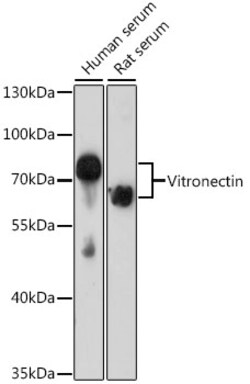
ABclonal Technology Vitronectin Rabbit pAb

This gene encodes a glycoprotein that functions as an adhesive molecule, promoting either cell adhesion or migration by linking cells to the extracellular matrix through ligands like integrins and plasminogen activator inhibitors. The protein is secreted as a monomer, dimer, or multimer and can inhibit the complement pathway’s membrane-damaging effects. It also binds serine protease inhibitors and contributes to extracellular matrix degradation, playing a role in tumorigenesis. Involved in coagulation, wound healing, and tissue remodeling, this protein has anti-microbial properties via its heparin-binding domain. It is also a lipid-binding protein and a key component of high-density lipoprotein.

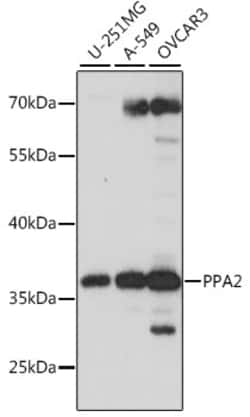
ABclonal Technology PPA2 Rabbit pAb
The protein encoded by this gene is localized to the mitochondrion, is highly similar to members of the inorganic pyrophosphatase (PPase) family, and contains the signature sequence essential for the catalytic activity of PPase. PPases catalyze the hydrolysis of pyrophosphate to inorganic phosphate, which is important for the phosphate metabolism of cells. Alternate transcriptional splice variants, encoding different isoforms, have been characterized.
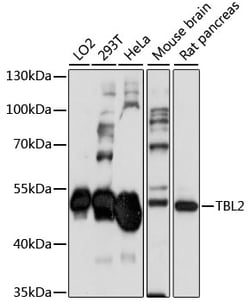
ABclonal Technology TBL2 Rabbit pAb
This gene encodes a member of the beta-transducin protein family. Most proteins of the beta-transducin family are involved in regulatory functions. This protein is possibly involved in some intracellular signaling pathway. This gene is deleted in Williams-Beuren syndrome, a developmental disorder caused by deletion of multiple genes at 7q11.23.
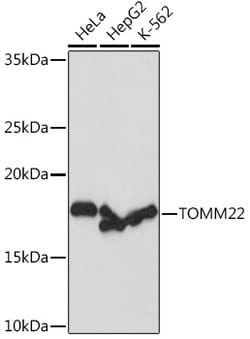
ABclonal Technology TOMM22 Rabbit mAb
The protein encoded by this gene is an integral membrane protein of the mitochondrial outer membrane. The encoded protein interacts with TOMM20 and TOMM40, and forms a complex with several other proteins to import cytosolic preproteins into the mitochondrion.
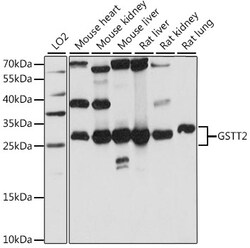
ABclonal Technology GSTT2 Rabbit pAb
The protein encoded by this gene, glutathione S-transferase (GST) theta 2 (GSTT2), is a member of a superfamily of proteins that catalyze the conjugation of reduced glutathione to a variety of electrophilic and hydrophobic compounds. Human GSTs can be divided into five main classes alpha, mu, pi, theta, and zeta. The theta class includes GSTT1, GSTT2, and GSTT2B. GSTT2 and GSTT2B are nearly identical to each other, and share 55% amino acid identity with GSTT1. All three genes may play a role in human carcinogenesis. The GSTT2 gene is a pseudogene in some populations.
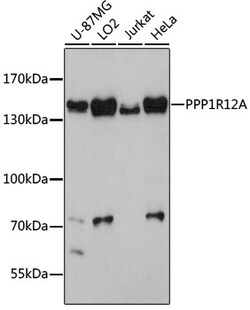
ABclonal Technology PPP1R12A Rabbit pAb
Myosin phosphatase target subunit 1 (MBS), also known as the myosin-binding subunit of myosin phosphatase, is a key subunit of myosin phosphatase. It regulates actin-myosin interactions downstream of the Rho GTPase. Rho is involved in myosin light chain (MLC) phosphorylation, which triggers smooth muscle contraction and actin-myosin interaction in nonmuscle cells. The active form of RhoA (GTP.RhoA) specifically interacts with MBS, regulating MLC phosphorylation. Rho-kinase, activated by GTP.RhoA, phosphorylates MBS and inactivates myosin phosphatase. Overexpression of RhoA in NIH 3T3 cells increases MBS and MLC phosphorylation. Thus, Rho inhibits myosin phosphatase via Rho-kinase. Several transcript variants encoding different isoforms have been identified for this gene.
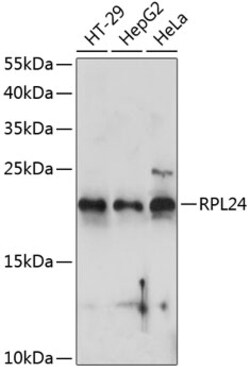
ABclonal Technology RPL24 Rabbit pAb
Ribosomes, the organelles that catalyze protein synthesis, consist of a small 40S subunit and a large 60S subunit. Together these subunits are composed of 4 RNA species and approximately 80 structurally distinct proteins. This gene encodes a ribosomal protein that is a component of the 60S subunit. The protein belongs to the L24E family of ribosomal proteins. It is located in the cytoplasm. This gene has been referred to as ribosomal protein L30 because the encoded protein shares amino acid identity with the L30 ribosomal proteins from S. cerevisiae, however, its official name is ribosomal protein L24. As is typical for genes encoding ribosomal proteins, there are multiple processed pseudogenes of this gene dispersed through the genome.
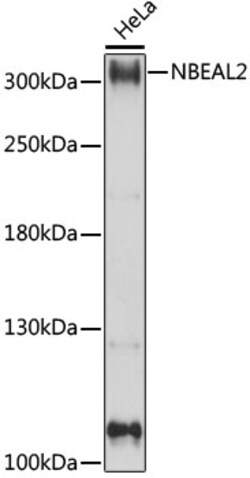
ABclonal Technology NBEAL2 Rabbit pAb
The protein encoded by this gene contains a beige and Chediak-Higashi (BEACH) domain and multiple WD40 domains, and may play a role in megakaryocyte alpha-granule biogenesis. Mutations in this gene are a cause of gray platelet syndrome.
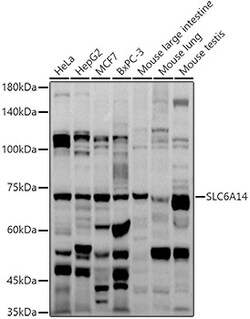
ABclonal Technology SLC6A14 Rabbit pAb
This gene encodes a member of the solute carrier family 6. Members of this family are sodium and chloride dependent neurotransmitter transporters. The encoded protein transports both neutral and cationic amino acids. This protein may also function as a beta-alanine carrier. Mutations in this gene may be associated with X-linked obesity. A pseudogene of this gene is found on chromosome X.
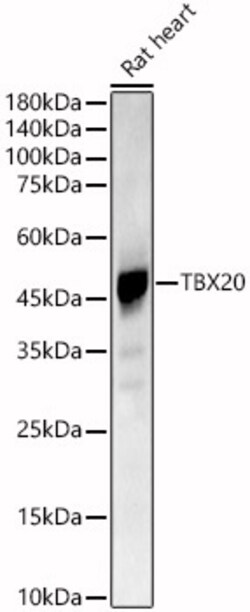
ABclonal Technology TBX20 Rabbit pAb
This gene encodes a T-box family member. The T-box family members share a common DNA binding domain, termed the T-box, and they are transcription factors involved in the regulation of developmental processes. This gene is essential for heart development. Mutations in this gene are associated with diverse cardiac pathologies, including defects in septation, valvulogenesis and cardiomyopathy. Alternatively spliced transcript variants encoding different isoforms have been found for this gene.
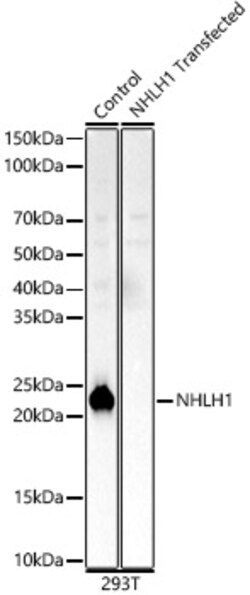
ABclonal Technology NHLH1 Rabbit pAb
The helix-loop-helix (HLH) proteins are a family of putative transcription factors, some of which have been shown to play an important role in growth and development of a wide variety of tissues and species. Four members of this family have been clearly implicated in tumorigenesis via their involvement in chromosomal translocations in lymphoid tumors MYC (MIM 190080), LYL1 (MIM 151440), E2A (MIM 147141), and SCL (MIM 187040).
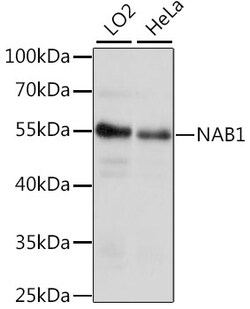
ABclonal Technology NAB1 Rabbit pAb
Predicted to enable transcription coregulator activity. Predicted to be involved in regulation of transcription, DNA-templated. Predicted to act upstream of or within endochondral ossification, nervous system development, and regulation of epidermis development. Predicted to be located in nucleoplasm. Predicted to be active in nucleus.
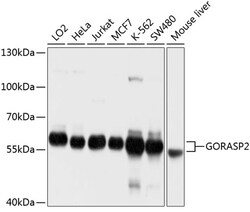
ABclonal Technology GORASP2 Rabbit pAb
This gene encodes a member of the Golgi reassembly stacking protein family. These proteins may play a role in the stacking of Golgi cisternae and Golgi ribbon formation, as well as Golgi fragmentation during apoptosis or mitosis. The encoded protein also plays a role in the intracellular transport of transforming growth factor alpha and may function as a molecular chaperone. A pseudogene of this gene is located on the short arm of chromosome 2. Alternatively spliced transcript variants encoding multiple isoforms have been observed for this gene.
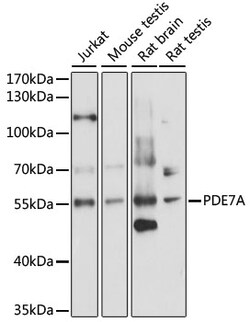
ABclonal Technology PDE7A Rabbit pAb
The protein encoded by this gene belongs to the cyclic nucleotide phosphodiesterase (PDE) family, and PDE7 subfamily. This PDE hydrolyzes the second messenger, cAMP, which is a regulator and mediator of a number of cellular responses to extracellular signals. Thus, by regulating the cellular concentration of cAMP, this protein plays a key role in many important physiological processes. Alternatively spliced transcript variants encoding different isoforms have been described for this gene.
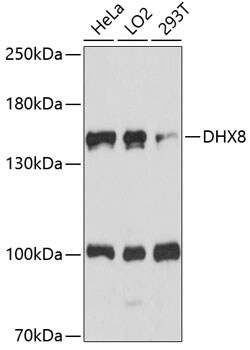
ABclonal Technology DHX8 Rabbit pAb
This gene is a member of the DEAH box polypeptide family. The encoded protein contains the DEAH (Asp-Glu-Ala-His) motif which is characteristic of all DEAH box proteins, and is thought to function as an ATP-dependent RNA helicase that regulates the release of spliced mRNAs from spliceosomes prior to their export from the nucleus. This protein may be required for the replication of human immunodeficiency virus type 1 (HIV-1). Alternative splicing results in multiple transcript variants.